Wednesday, November 18, 2020

Principles - Standards - Values

 Principles / Standards / Values

*

attitude is everything

*

Whatsoever things are true, whatsoever things are honest, whatsoever things are just, whatsoever things are pure, whatsoever things are lovely, whatsoever things are of good report; if there be any virtue, and if there be any praise, think on these things. Philippians 4 : 8 KJV “


Personal Values


A set of values obtained throughout a lifetime, are created, and influenced by personal, social, educational, and spiritual interactions. Good values will result in positive results in life. Although not always or in all things.


Tribulation worketh patience; and patience, experience; and experience, hope. 

Romans 5: 3 – 4. KJV”


There is a freedom in making positive choices for the future. These can make any decision less difficult, because of the set of positive values guiding it. Resulting in clarity, rationality, responsibility, and consistency over time. Standards will develop, that can become guide-lines in making choices. An independence of negative influences is another effect in the development of positive values.

The night is far spent, the day is at hand; let us therefore cast off the works of darkness, and let us put on the armor of light. Romans 13; 12. KJV.” “ For we wrestle not against flesh and blood, but against principalities, against powers, against the rulers of the darkness of this world, against spiritual wickedness in high places. Wherefore take unto you the whole Armour of God, that ye may be able to withstand in the evil day, and having done all, to stand. Stand therefore, having your loins girt about with truth, and having on the breastplate of righteousness; and your feet shod with the preparation of the gospel of peace; above all, taking the shield of faith, wherewith ye shall be able to quench all the fiery darts of the wicked. And take the helmet of salvation, and the sword of the Spirit, which is the word of God: Ephesians 6 : 12 – 17, KJV.”


Positive values inspire those who hold them and reflect personal integrity. An optimistic view despite difficulties is essential to evade any negative thoughts or actions. Positive affirmations reinforce a sense of good judgment in any situation, and peace of mind and contentment will follow. A few examples of positive affirmations and actions are;


Love, & Compassion; for others, especially those within the family These are the most important of all positive values, it is greater than all others, encompasses all and it is the one to be most sought after. 


Love suffereth long, and is kind, love envieth not, love vaunteth not itself, is not puffed up. Doth not behave itself unseemly, seeketh not her own, is not easily provoked, thinketh no evil; Rejoiceth not in iniquity, but rejoiceth in the truth; Beareth all things, believeth all things, hopeth all things, endureth all things... and now abideth faith, hope, love, these three; but the greatest of these is love. 1 Corinthians, 13 : 4 – 7 & 13, KJV.”


Hope / Faith, To have abiding faith, and hope, is optimism for the future, without doubt, to believe the outcome is  determined by the path taken to achieve a goal, that takes patience and an understanding that the results will be proven to be correct and true. 

“ Now faith is the substance of things hoped for, the evidence of things not seen. Hebrews 11: 1, KJV. “


Inspiration / Motivation; The spirit that determines a method or course of action, a result of external experiences and internal wisdom. Leading to those interests that are most desired and important. It is something that is used to strive for a better, more fulfilling life.

Happy is those that findeth wisdom, and those that getteth understanding, let not them depart from thine eyes; keep sound wisdom and discretion; Proverbs 3: 13&21 KJV.

Doth not wisdom cry? And understanding put forth her voice? Hear; for I will speak of excellent things; and the opening of my lips shall be right things. They are all plain to those that understandeth, and right to them that find knowledge. Proverbs 8: 8,6 & 9, KJV. “


Persistence / Determination, is a great motivator, the resilience to continue on, despite difficulties, is a great accomplishment in itself. Realization of the responsibilities required in all meaningful endeavors, gives clarity and a reason to find the path forward that results in the best chance of success.

Nothing in this world can take the place of persistence. Talent will not; nothing is more common than unsuccessful men with talent. Genius will not; unrewarded genius is almost a proverb. Education will not; the world is full of educated derelicts. Persistence and determination alone are omnipotent. The slogan, press on ! Has solved and always will solve the problems of the human race. Calvin Coolidge.”


Forgiveness / Kindness; when difficult circumstances arise, be careful not to judge yourself or others too harshly. Many problems are solved with a forgiving heart. and with time will result in a just outcome. Kindness and mercy toward yourself and others is powerful and useful to your benefit.


Then shalt thou understand righteousness, and judgment, and equity; yea every good path, Proverbs 2; 9, KJV. “


Joy / Happiness; there is always a place and time for the satisfaction that brings about inner and outer joy and happiness that comes with accomplishments, and special occasions. Inner joy may be as subtle as a feeling of satisfaction. Outer happiness are more clearly expressed in ways that are celebrations to be shared with others that are included in events or activities.

Know ye not that ye are the temple of God, and that the Spirit of God dwelleth in you. 1 Corinthians 3; 16 KJV”


Stand fast therefore in the liberty wherewith Christ hath made us free. The fruit of the Spirit is love, joy, peace, long suffering, gentleness, goodness faith, meekness, temperance; against such there is no law. Galatians 5: 5, 22 & 23 KJV.”


Gratitude / Contentment; To be thankful and to be appreciative of what you have is a natural positive value. Being mindful of all that has been afforded in a favorable way, is as important as being mindful of everything unfavorable that has been avoided. Along with a little humility avoids selfishness. Contentment with what “is” can be simple or complex. The proof is in the way it is perceived.

abundance or want can both be a burden or a blessing.

The peace of God, which passeth all understanding, shall keep your hearts and minds through Christ Jesus. I know both how to be abased, and how to abound: everywhere and in all things I am instructed both to be full and to be hungry, both to abound and suffer need. I can do all things through Christ who strengtheneth me. Philippians 4: 7, 12&13, KJV. “

Ask and it shall be given you; seek, and ye shall find; knock, and it shall be opened unto you; For everyone that asketh receiveth; and he that seeketh findeth; and to him that knocketh it shall be opened. Matthew 7: 7&8, KJV.

May the Lord bless you, and be gracious unto you.

May the Lord give you peace. Numbers 6: 24 – 26, KJV. “


Confidence / Integrity; having a complete assurance of decisions made, and those to be made, because of the development of a foundation that is based on a set of values that are used in any and all situations, having become integral, and ingrained in thoughts and actions, that they eventually become automatic or second nature in everything, letting your conscience be your guide. Being honest and sincere in every situation, and trust worthy in all things given into your care will build character and integrity.


A wise man, built his house upon a rock: And the rain descended, and the floods came and, the winds blew, and beat upon that house; and it fell not, for it was founded upon a rock. Matthew 7: 24-27, KJV.


Thy word is a lamp unto my feet, and a light unto my path. Psalm 119: 105 KJV. “


***

For the law of the Spirit of life in Christ Jesus hath made me free. Romans 8: 2, KJV.”


Now the Lord is that Spirit: and where the Spirit of the Lord is , there is liberty.

2 Corinthians 3: 17 KJV.”


The fruit of the Spirit is in all goodness and righteousness and truth.

Ephesians 5: 9, KJV.”


For God hath not given us the Spirit of fear; but of power, and love, and of a sound mind.

2 Timothy 1: 17, KJV. “


Moral Standards / Values / in Society


values are a guide, and social morals are rules for the betterment, and positive direction of a culture, a society. The law is a firm set of rules to be followed, also there are values, that are social morals. That are created through personal beliefs and the shared values of a society. These are principles that guide individuals on good and bad, behavior right, and wrong attitudes.


Ethical / Standards / Values


Ethics refer to a set of standards of behavior expected by a group of people to which an individual is a member,

Unlike morals that are created by groups of people to maintain the good or right balance of society, ethics take it one step further. Ethics are rules or norms that have to be established in a particular context to make sure that they are upheld at all times, by members of professions, companies, and the leaders of countries. “a code of ethics.”


Family Standards / Values

Families standards and values guide the attitudes and beliefs of a family in their day to day living and lifestyle. Determining what is important and, what is right and good for a family.


Importance of Family Values


Personal values are deeply held standards, and are brought into a family by everyone, no matter the original source they are obtained from. The family's standards and values will shape, and reshape personal values and the morals of everyone. A family should be a positive experience. Creating healthy, strong and meaningful family relationships.


Family

Standards and Social Values


Personal ethics drive how a family, functions within society, and knowing “right” and “wrong.” Kindness, respect, patience, and resilience, honesty, integrity, responsibility and gratitude are examples of values a family may share between parents, siblings, and relatives. These moral values are reinforced through spiritual training, school, popular culture, and social interactions. Defining good behaviors and leading by example can go a long way toward making sure family values eventually become intrinsic. When it comes to our closest relationships, our values can help shape what it means to be a good husband, a good wife, a good parent, and a good sibling. Standards / Values are guide-lines to developing healthy relationships.


The difference between a family's values and a family's culture are, values, the beliefs held by a family, a family's culture is the active results of those values–it’s how a family lives day to day and their lifestyle. A family's values are revealed by the way their culture is expressed outside of the family.


Spiritual and Religious Values

Families in sharing a belief of something greater than themselves, find spirituality significantly strengthens the family. Spiritual and religious values can also influence other values–like moral values and social behavior. At the center of most spiritual and religious value systems is the importance of worship and prayer. Spiritual and religious values, faith traditions, belief in a higher power and the promotion of spirituality provide families with a sense of direction and unity. Spiritual values are a consistent comfort and guide.


Traditions

Traditions are important, especially ones that have been passed down for decades. Participating in the same formal or informal rituals and observances is a way for a family to become invested in their heritage. New traditions you initiate with the family can elevate even everyday experiences to something extraordinary and help hold the family together over time by creating powerful memories.


Education

Education promotes a more stable and enjoyable life. Becoming more educated is an important goal, the idea of lifelong learning, appreciation of the desire to constantly learn more about the world and to acquire new knowledge and being able to achieve the skills that will be needed in life. Educational skills can be obtained through a structured or informal way, whatever the path to education, the family's support structure is vital for a satisfactory and successful outcome.


Work Ethic

A strong work ethic is an important family value. A work ethic can be a guide to the way to view work to the way everyone in the family approaches, and appreciates their contributions and work accomplishments, and financial benefits in achieving a successful family life and lifestyle, is part of a strong work ethic. Contributing to the family’s success through household chores, to being included in family decisions create an atmosphere for the family to function more effectively, with the welfare and success of the family being a consideration over personal or individual needs. When family's spend time together finding creative solutions to the challenges of family issues or problems, it creates or reinforces the family's cohesion.


Finances

Many families place a high priority on using their financial resources in ways that help them live out their economic values. This includes setting careful guidelines for how much money to spend, how much to save, setting guidelines for exactly how they want to spend their money, and how to use their economic resources


Political Values

Conservatives, Moderates, and Liberals have different opinions on how government should be run, or what laws are enacted. Personal values should remain consistent despite political ideologies, American values include:

    Exceptionalism - that America is a land of opportunities.

    Patriotism, working toward national success.

    Free speech, and constitutional rights.

    Capitalism and private ownership of property

    Everyone being entitled to equality under the law.

    Following the law and respecting those who enforce it. 


Health and Fitness

a healthy diet and exercise are important,. Many families approach health and fitness together–cooking healthy meals, and engaging in sporting activities, enjoying quality time together, while engaging in healthy recreational activities help families to connect with each other. Spending time outdoors together in activities give families time to interact with each other without distractions. Recreation is important in the family because it fosters closeness in the family, opportunities for learning, creating memories, improving social skills Exercise is important for both physical and mental well-being.


Family Entertainment

Entertainment choices are very important to the material values that contributes to family life, enjoying appropriate entertainment, a family will set the boundary's that define what entertainment is appropriate within the family. Over the broad spectrum of visual media, music, sports, hobbies, a family will be influenced in a myriad of ways by what kind of entertainment is enjoyed by the family. Somethings that are of mutual interest to everyone will foster a greater connection within the family


Family Time

Activities together create a sense of unity and memories, important for the relationships within a family. Time together engaging in activity's everyone finds fun and relaxing. planning a family outing, a family game night or movie night. Families should have evening meals together often. Regular family meetings are way to ensure quality family time together, discussing major issues and decisions that affect the whole family. Spending time together encourages , and helps form stronger unity between the entire family.


Time Management

All aspects of daily living require a lot of time management.

Arranging items of importance to the schedule or calendar is a natural activity, to be able to fulfill the time needed to fit all activities in is something that everyone struggles with. Making and keeping schedules is important to a family, because everything necessary has to get done, in some way form, or fashion. Appropriating time for work, school, meals, recreation, leisure, rest, etc, can occur as it will or with a little for-thought to the future it can be pre-planned to avoid overlaps in time or missed activities. Boundaries should be set as to how much each activity is allowed, so that everything is managed, and is included as seen fit, and no one activity overwhelms, to the exclusion of others.


Communication

Communication is key in all aspects of family life. How it is done is what matters most. Reasonable, measured, and direct is the most desirable way to communicate with others, but that is a ideal not reality. Respect toward everyone is a necessity, if there is to be meaningful interactions. A clear and meaningful conversation is always what is desired, but as with all things, meanings get lost in translation. Attempt to define and explain what is said, miscommunication is common. Repetition, although not desirable, might be necessary to clarify meanings in conversations. There is always the occasional emotional outburst, and these should be taken within proper context, and if of a negative nature the basis of the problems should be explored, defined and resolved. If of a positive nature, then have interest, encouragement, and support. As with everything else conversations must have boundaries, what is said between adults, and what is said between youngsters and adults, all have a specific nature. It is of vital importance that a family maintain lines of communication between everyone in a family, take no one for granted, this interaction, involvement and relationship with each other, will have good results, and be a positive element.


   ***

Principles, standards, and values are derived from many sources over time, Some being of greater importance and others less, and they take on a variety of forms for each individual. Then there are the emotional responses that are to be taken into account. Those under the age of legal maturity it is understandable if their standards and values are still in the formation process, and emotional responses are sometimes a major factor in the decision making process. Under the law they are still to be afforded an allowance as the status of a minor and not always held to account for inappropriate responses and actions, unless very seriously egregious. During this time of maturing a person should be exposed to principles and values that they will adopt as their own, and learn the reasons why they are important in life. Some individuals will reach a certain level of maturity even before becoming a teenager, others not so much. After an individual reaches the legal age of maturity their actions and reactions are considered their own responsibility, and are held accountable for such. By this age the emotional responses to situations are usually under-control, restrained, and even- tempered. All this factors into principles, standards and the value systems of an individual. Inside a family setting a person can gain insight to those ideals as they mature, or as a head of household they may adjust them to their own style, but usually it is just a different form of the same values they were taught, hopefully with as good or better results. If the values fall short of that which produce a positive and successful family life, there is always adjustments that can be made, After all of the different elements are taken into consideration and into account, it is gratifying to realize that a life and lifestyle free of stress and unnecessary problems is available and can be obtained by any individual or family. 


Positive Personality Traits

Openness to experience

a general appreciation for art, emotion, adventure, unusual ideas, imagination, curiosity, and variety of experience. People who are open to experience are intellectually curious, open to emotion, sensitive to beauty and willing to try new things. They tend to be, more creative and more aware of their feelings. As an example, having a rich vocabulary, a vivid imagination, excellent ideas, quick to understand things, use of difficult words, spending time reflecting on things, and are full of ideas.

Conscientiousness

Conscientiousness is a tendency to display self-discipline, act dutifully, and strive for achievement against measures or outside expectations. It is related to the way in which people control, regulate, and direct their impulses. a preference for planned rather than spontaneous behavior. As example, preparedness, attention to detail. getting chores done right away. like order. follow a schedule. exacting in work.

Extroversion / Introversion

characterized by breadth of activities, from external activity/situations, and energy creation from external means. pronounced engagement with the external world. enjoy interacting with people, and are often perceived as full of energy. They tend to be enthusiastic, action-oriented individuals. They possess high group visibility, like to talk, and assert themselves. Introverts have lower social engagement and energy levels than extraverts. They tend to seem quiet, low-key, deliberate, and less involved in the social world. Their lack of social involvement should not be interpreted as shyness or depression; instead they are more independent of their social world than extraverts. Introverts need less stimulation, and more time alone than extraverts. This does not mean that they are unfriendly or antisocial; rather, they are reserved in social situations Generally, people are a combination of extraversion and introversion. As example. feeling comfortable around people. starting conversations. talking to a lot of different people, do not mind being the center of attention. Or, do not talk a lot, keep in the background. having little to say. do not like to draw attention to themselves, and quiet around strangers.

Agreeableness

general concern for social harmony, value getting along with others, generally considerate, kind, generous, trusting and trustworthy, helpful, and willing to compromise their interests with others, have an optimistic view of human nature. As examples, interested in other people. sympathize with others' feelings. have a big heart. take time out for others. feel others' emotions. make people feel at ease.

Neuroticism

sometimes called emotional instability, the tendency to experience negative emotions, such as anger, anxiety, or depression, and have a low tolerance for stress, emotionally reactive, interpret ordinary situations as threatening. They can perceive minor frustrations as hopelessly difficult. Negative emotional reactions tend to persist for unusually long periods of time, a pessimistic approach, and higher levels of anxiety neuroticism also changes in response to positive and negative life experiences. As example, stressed easily, excessive worrying, easily disturbed, irritated and upset or depressed.

or in reverse is referred to as emotional stability. individuals who are low in neuroticism are less easily upset and are less emotionally reactive. They tend to be calm, emotionally stable, and free from persistent negative feelings. Are able to think clearly, make decisions, and cope effectively with stress. 


Sunday, May 31, 2020

Capturing Light, The Origins of Photography, / Part 1 Beginnings of Imagery /

Capturing Light
the
Origins of Photography
/ Part 1 / Beginnings of Imagery / 


   From the earliest times, people all over the earth have made images, of themselves and their surroundings. First with the natural elements they had. Rudimentary petroglyphs, and pictographs are the first known depictions created. As societies, and cultures became more advanced, the images that 
were created were also more sophisticated and detailed. Images later began to appear on decorative and utilitarian objects, pottery, jewelry, tools,weapons, sculpture, and architecture. These types of imagery, and more, continued to be made in a contemporary style, unique in their perspective to each of the civilizations that created them, and have endured in various forms  into the present day.A natural phenomenon was observed in a early culture of the far east. The first written reference to it was by a  Oriental scholar and philosopher Mozi, in the 4th century B.C. He noticed that when sunlight, reflecting off of an object, was reflected onto a screen with a small hole in the center, the light will penetrate through the hole, and project an exact image onto a screen placed behind the first. Although this was unique and interesting, there was no practical use, and was only a curiosity to those who knew of it. Much later it would become known as " Camera Obscura " and was the foundation of all the future developments of what would eventually become photography, and motion pictures.
   Leonardo deVinci, in 1502 writings described the light effect 
If the facade of a building, or a place, or a landscape is illuminated by the sun and a small hole is drilled in the wall of a room in a building facing this, which is not directly lighted by the sun, then all objects illuminated by the sun will send their images through this aperture and will appear, upside down, on the wall facing the hole. You will catch these pictures on a piece of white paper, which placed vertically in the room not far from that opening, and you will see all the above-mentioned objects on this paper in their natural shapes or colors, but they will appear smaller and upside down, on account of crossing of the rays at that aperture. If these pictures originate from a place which is illuminated by the sun, they will appear colored on the paper exactly as they are. The paper should be very thin and must be viewed from the back."
   The oldest known drawing of a device, ( camera obscura ),was by Dutch physician, Gemma Frisius, when he had written how to build a structure to create the light effect to observe an eclipse of the sun, that occurred in  January 24, 1544. The earliest use of the actual term " Camera Obscura ", was first written in 1604, by mathematician and astronomer  Johannes Kepler.


 He used a device with a telescope within a tent to draw landscapes from the images projected onto a screen. 

Monday, May 25, 2020

Origins of the Mediterranean and Baltic sea Trade Advancing Civilization and Christianity / part 3 / Baltic Sea Trade the Nordic Culture and Long-Distance Trade

Origins of the
Mediterranean and Baltic Sea Trade
 Advancing Civilization and Christianity

/ Part 3 / Baltic Sea Trade /

Baltic Sea Trade
the
Nordic Culture
and
Long-Distance Trade


   The Nordic Bronze Age emerged about 1700 B.C. Through the fusion of the Battle Axe culture and the Pitted Ware culture. They maintained close Trade links with Mycenaean Greece, with whom it shares many similarities. The Nordic Bronze Age amber was exported over the amber road, which linked the Baltic Sea to the Adriatic Sea, importing metals in return. Copper, tin,and gold were imported from the Mediterranean into Scandinavia in large quantities. Trade was briefly disrupted during the Bronze Age Collapse in the 12 century B.C. Nordic Bronze Age workmanship and designs is very similar to Mycenaean Greece, and of such a nature that the Nordic Bronze Age culture has been described as a Nordic version of Mycenaean high culture. These similarities could not have occurred without consistent contact with the Mycenaean's. Such similarities are not seen in other European Bronze Age cultures.
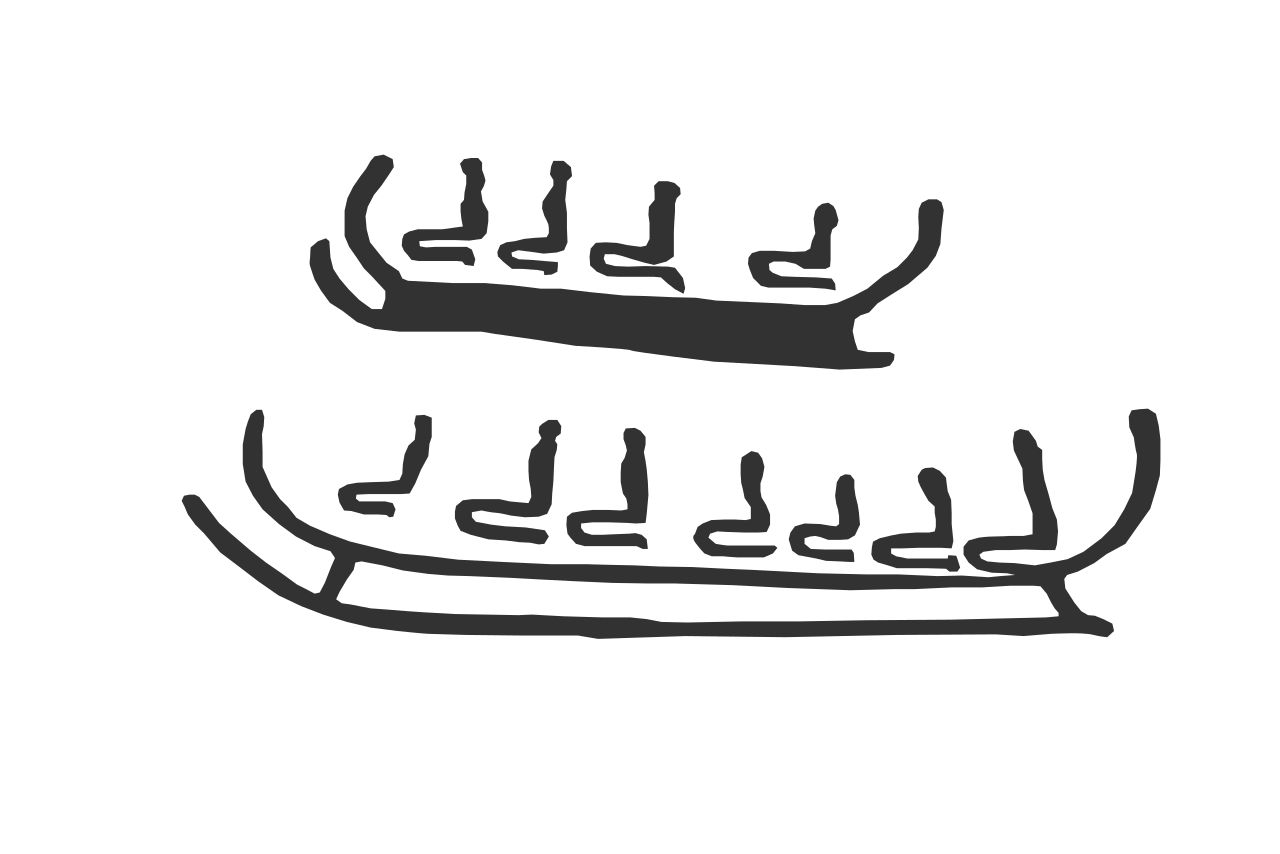
File:Petroglypgh Ship Nordic Bronze Age 008.svg - Wikimedia Commons
Nordic Petroglyph
   Thousands of rock carvings from the Nordic Bronze Age depict ships, along with the large stone burial monuments, known as “stone ships” show that seafaring played an important role in the Nordic culture. The ships that are depicted show a type of plank built “canoes” used for fishing, trade, and warfare. These vessels have their origins as far back as Neolithic times, and continues up into the Pre-Roman Iron Age. One example is the,  pre-iron age, Hjortspring boat discovered in Denmark. During the Nordic Bronze Age (1700-500 B.C.) an advanced civilization begins to appear in Denmark, Sweden, and Norway. They manufactured bronze tools, and weapons as well as jewelry and other artifacts from imported Bronze and gold, that was exchanged for Baltic amber, through trade with Central Europe and Mediterranean cultures.

   The Atlantic and North Sea coastal regions of Scandinavia, and Baltic were united by a maritime economy, allowing for a widespread geographical culture. The large number of rock carvings of ships throughout the region attest to a seafaring culture, where the sea brought the people together in a common environment. At the beginning of the Nordic Bronze Age society flourished with the emergence of long distance trade in metals, from 1600 B.C. onward southern Scandinavia came to be closely linked with the other existing trade networks, and from 1500 B.C. Onward a separate Nordic style emerged from European and Mediterranean influence's.
   Nordic style emerged from European and Mediterranean influence's Bronze Age people were not just trading, but were traveling long distances. Nordic amber has been found in many locations in southern Europe and around the Mediterranean. Blue glass beads from Egypt and Mesopotamia have been found in Scandinavian grave sites. These goods were traded by people venturing to far off lands. The European Bronze Age was a time of innovation, social transformation, and expansion of knowledge, being brought about with the help of long distance trade connections, international trade relations were established and maintained. Proof of this are in the artifacts discovered across Northern Europe.

Women in trade, and Nordic Bronze Age girls.
   The Egtved girl, is a Nordic Bronze Age girl. She is named after the Danish village where she was discovered, in a Bronze Age oak coffin, in an elite burial site. She was of high status, and was wearing  a woolen dress, and bronze disk shaped belt plate, both made from materials from Southern Europe. Bronze Age Denmark was a consistent source of Baltic amber, sought after by Mycenaean Greece, and the Middle East, with Southern German merchants facilitating the trade between the two regions, with bronze as the means of payment. In Bronze Age Western Europe, Denmark and Southern Germany were two centers of dominance. The Egtved girls garments were evidence of the relationship between the two trading centers.
   The Skrydstrup woman had an royal elegance. She was taller than most of the other women of that era. With long braided hair, worn up like a crown. With an intricately embroidered dress, and gold ornaments. She was discovered in an oak coffin, within an elaborate burial mound, in an area of Southern Denmark, where there had been large a settlement of longhouses. Known to have been a center of wealth and trade.
  The Egtved girl and the Skrystrup woman lived at approximately the same time in history. Both were interrer in elite oak coffins, in elaborate burial mounds. Their garments and ornaments revealed the long distance trade that was occurring during that time. They were connected to a wide and varied cultural influnces outside their own.

   The Iron Age; The 6th and 5th centuries B.C. were times of change for importing and exporting in Europe. Conflicts in Central European and Mediterranean cultures interrupted major trade routes between Scandinavia and the  Mediterranean at the end of the Nordic Bronze Age, and caused cultural changes in Scandinavia. Bronze became scarce, and iron a local resource, began to be used more extensively as a substitute for bronze. Starting in the 6th century BC, the use of iron as a material begins in the north. During the 1st century BC, Roman troops and German tribes conquer Celtic territory and join up on the Rhine and Danube. As a result, the exchange of information and material arises. Names and actions by the population in the north become known in the Roman Empire and are recorded. The Germanic cultures step into the light of Roman historiography.


Thors Hammer
Hammer of Thor

Germanic Cultures; The Roman Iron Age (1-400A.D.).The name originates from the hold the Roman empire exerted on the Germanic tribes of Northern Europe.in Scandinavia there was a large importation of goods, such as coins, vessels, bronze images, glass beakers, enameled buckles, and weapons. the style and make of these objects were of Roman origin.
   

   The Vandals; In Swedish prehistory the Vandel period (550-790 A.D.) comes between the migration period and the Viking Age. The Vandals were a Roman-era, Germanic people. The tradition is that the Vandals migrated from Southern Scandinavia, and settled in Central Europe after the 2nd century B.C., along with other allied tribes, the Goths, Visigoths, and Ostrogoths, The Vandals were primarily farmers whose settlements were located along river valleys. They raised crops, tended cattle, and were skilled with horses and were craftsmen of jewelry, ceramics, weaving, and weaponry. Along with many other Germanic tribes the Vandals were participating in the, “wandering of the nations”, (376-476 A.D.) where a large scale migration, escaping the invasion of their lands, by the nomadic Hun's, brought them in closer contact with other cultures and the Roman Empire, some serving in the Roman legions. They eventually migrated into the Iberian peninsula, and afterward took control of Northern Africa. Where they defeated the Roman naval fleet of the West in 460 A.D., and were defeated by the Roman legions of the East in 533 A.D. The surviving Vandals lived within and were assimilated into Roman society, and were no longer a separate culture.
   
   Anglo Saxons;"Germanic peoples" is a term which commonly includes peoples who were not referred to as Germanic by their contemporaries, and spoke distinct languages, only categorized as Germanic in modern times. Examples include the late Roman era Goths, or the early Medieval Norse speaking Vikings in Scandinavia. So, what we know call the Anglo-Saxons of Britain were a mixed Germanic/ Celtic/ Scandinavian Peoples. They were Germanic tribes which shared common culture, and origin. The Anglo-Saxons were a cultural group who inhabited Great Britain from the 5th century. They comprised people from Germanic tribes who migrated to the island from Continental Europe, their descendants, and indigenous British groups who adopted many aspects of Anglo-Saxon culture and language. The Anglo-Saxons established the Kingdom of England, and the modern English language owes almost half of its words – including the most common words of everyday speech – to their language. Historically, the Anglo-Saxon period denotes the period in Britain between about 450 and 1066, after their initial settlement and up until the Norman conquest. The early Anglo-Saxon period includes the creation of an English Nation, with many of the aspects that survive today,


   A Roman scribe Pliny the Elder described the different Germanic tribes the Roman Legions encountered on the frontier in Northern Europe.
   The Ingaevones, consisting of the Cimbri, Teutoni, and Chauci tribes. living by the North Sea.
   The  Istaevones, whose borders are the Rhine river.
   The Hermiones, living in the in the interior regions, consist of the Suevi, Hermunduri, Chatti, and Cherusci tribes.
   The Ingaevones were a West Germanic cultural group living along the North Sea coast in the areas of Jutland, Holstein, and Frisia .
   The Ingaevones were made up of Cimbri, Teutons and Chauci. North Sea Germanic, also known as Ingvaeonic  or Northern, West Germanic Languages, that consists of Old FrisianOld English and Old Saxon and their descendants. Ingaevones formed the bulk of the Anglo-Saxon settlement in Britain.
   There is an overlap between Germanic tribes of the Istvaeonic language and culture, and later tribes that were the earliest of the "Franks". The Franks were a group of Germanic people, whose name was first mentioned in 3rd century Roman sources, and were considered to be the tribes living between th lower Rhine and Ems rivers, on the edge of the Roman Empire. In the Middle Ages, the term Frank came to be used as a term for Western European, as the Carolingian franks were rulers of most of western Europe, and established a political order that was the basis of one of the oldest European monarchy, that ended with the French revolution. 


An Emblem Of Celtic Identity Celtic Cross Coloring Pages : Best Place to Color
Celtic Cross
   
   The Celts; By the third century B.C., the Celts controlled much of the European continent north of the Alps mountain range, including present-day Ireland and Great Britain. It is these islands off Europe’s western coast in which Celtic culture was allowed to survive and thrive, as the Roman Empire expanded on the European continent The Celts were a collection of tribes with origins in central Europe that shared a similar language, religious beliefs, traditions and culture. It’s believed that the Celtic culture started to evolve as early as 1200 B.C. The Celts spread throughout western Europe—including Britain, Ireland, France and Spain—via migration. Their legacy remains most prominent in Ireland and Great Britain,where traces of their language and culture are still prominent today.


   The Germanic Iron Age; A new age began in Northern Europe it was The Germanic Iron Age, it is divided into the early and late stages. In Sweden (550-800 A.D.) it is called the Vendal Era in Norway, and Finland it is called the Merovingian Age. The Germanic Iron Age begins with the fall of the Roman Empire, and the rise of the Celtic and Germanic kingdoms in Western Europe. It is followed in Northern Europe and Scandinavia by the Viking Age. During the decline of the Roman Empire an abundance of gold flowed into Scandinavia. There have been found artifacts of highest quality, made during this time (5-6 centuries A.D.) such as scabbard mountings and bracelets. The Roman Empire had been overrun by Germanic tribes, and many Scandinavians returned home with gold and silver received in payment for services for or against the Romans.
   
   Vikings – Varangians; The Scandinavians of the Viking Age are referred to as Vikings or Norsemen, and was preceded by the Germanic Iron Age. The time of the Viking Age was from about 800-1050 A.D. The homelands of the Vikings were in Scandinavia, but the countries that make up that region today did not exist until the end of that age. Those Viking age people shared a common aspects, such as house construction, jewelry, tools, and weapons. Throughout that age the main focus was on the production of food. Farming, fishing, trapping, and gathering. Communities were self sufficient, taking advantage of the fertile soil, good pasture, abundant fishing areas, and whatever nature provided. They were experienced in making tools and equipment from raw materials. Self -sufficiency was the basis for their success. The local chieftains who felt threatened by nearby settlements, began to broaden their outlook to lands across the sea. At first trading goods from the North, amber, furs, timber, and iron for goods from the South gold, silver, silk, and spices. The seafaring Vikings came from the present day countries of Sweden, Denmark, and Norway. Their reputation was as tactical warriors, shrewd traders, merchants and fearless explorers. For most of the men that became Vikings, they were planting crops and farming, then afterward went on sea raids, to return home to harvest their fields. Profitable raiding attracted more people to become Vikings, and to abandon other occupations.
During The Viking Age Scandinavians built settlements throughout Europe and beyond. It came about as a result of the expanding centers of trade throughout the European mainland, as trade routes pushed further north. Anglo Saxon England began to prosper ,and the Vikings sought out these profitable areas in England, as well as elsewhere in Continental Europe, and the Mediterranean region. The impact the Vikings had changed the history of British Isles, and Europe. 
The Viking Age occurred as a result of technological innovations developed in sailing. making it possible for Viking raiders to reach far away locations. Larger sails were made primarily for this use.They created long-ships that were specifically designed for sea travel. The Vikings were competent sailors, with advanced ships and navigation they used their long-ships for long-distance travel. The shallow draft of the boats made it possible, after a sea voyage, to continue their travels, sailing into shallow waters in rivers, allowing them more accessibility farther inland. The ships were agile and lightweight enough to be able to carry over land, from one river system to another. The kingdoms of the Vikings developed into fortified coastal towns, dependent on the North and Baltic Sea for survival. Control of the waterways was of the upmost importance, and the best built ships were in demand. The Viking Age was also the long ship age, it was the one thing that provided the means, and ability to achieve their greatness in warfare, politics, and Trade. Because of the importance of the ships, they became a religious symbol of dominance and strength. 
   
   The Varangians; The new term Varangian was increasingly preferred to the name Scandinavian, mostly from what today is Sweden, plying river-routes between the Baltic and the Black Seas. The name is derived from Old Norse language "Vaeringi" Var / pledge of faith, and "Gengi" / sworn companion, extended to mean, a one who has taken an oath or pledged into to a foreign service. The Varangians left a number of rune stones in their native Sweden, that tell of their journeys. The Varangian runestones tell of many notable expeditions, and the individual warriors and travelers. The largest group of runestones tell of foreign voyages, these are known as the Greece runestones, these were placed by former members of the Varangian Guard or in their memory. a smaller group are the  Italy runestones, raised  in memory of members of the Varangain Guard who died in the conquest of  Southern Italy. 


Norse Designs
Nordic Rune Stone
   
Norsemen; The term Norsemen "Northman" applied to Norse-speakers, by the peoples they encountered, during the Middle Ages.The Old Frankish word Nortmann / Northman, was Latinized as Normannus, and widely used in Latin texts
, then entered the Old French language as Normans. from that word comes Normandy, which was settled by the Norseman in the tenth century. In Scandinavia, the Viking age is considered to have ended with the the establishment of royal authority, and Christianity in the Scandinavian countries. As a result of the Viking age Scandinavia developed from loose knit, independently ruled tribal communities to the three Nordic countries that exist today. 


   Long-Ships; were naval vessels made and used by the Vikings from Scandinavia and Iceland for trade, commerce, exploration, and warfare during the Viking AgeThe long-ship's design evolved over many years, beginning in the Stone Age with the invention of the umiak, and continuing up  to the 9th century with the Nydam and Kvalsund ships. The long-ship appears in its complete form between the 9th and 13th centuries. The character and apperance of these ships have been refelected in Scandinavian boat-building traditions until today. The average speed of Viking ships varied from ship to ship but lay in the range of 5-10 knots, and the maximum speed of a long-ship under favorable conditions was around 15 knots. 
   The long-ship is characterized as a graceful, long, narrow, light, wooden boat with a shallow draft hull designed for speed. The ship's shallow draft allowed navigation in waters only one meter deep and permitted beach landings, while its light weight enabled it to be carried over portages Long-ships were also double-ended, the symmetrical bow and stern allowing the ship to reverse direction quickly without having to turn around. Long-ships were fitted with oars along almost the entire length of the boat itself. Later versions sported a rectangular sail on a single mast which was used to replace or augment the effort of the rowers, particularly during long journeys.

   long-ships were the epitome of Scandinavian naval power at the time and were highly valued possessions. They were often owned by coastal farmers and commissioned by the king in times of conflict, in order to build a powerful naval force. While long-ships were deployed by the Norse in warfare, they were mostly used for troop transports, not as warships. In the tenth century, these boats would sometimes be tied together in battle to form a steady platform for infantry warfare. Long-ships were called dragon-ships (drakuskippan) by the Franks, because they had a dragon shaped prow. 


Славянские татуировки, фото и эскизы тату салона NewStream Tattoo Краснодар


   The Drekar or dragon headed long-ships carried Viking raiders from Northern England to North Africa. Viking expertise in naval craftsmanship soon led to the evolution of other types of ships. Among these were the Knarr, or ocean going cargo vessel. Which facilitated far flung trading networks. Scandinavia is a region with high inland mountain ranges, dense forests, and easy access to the sea with many ports. The ship has been functioning as a centerpiece of Scandinavian culture for over a thousand year. Serving both utilitarian and religious roles, it's importance was already established before the Viking Age. Stone engravings from the Nordic Stone and Bronze Ages depict ships in various locations, and types. Some of the most valuable ships were sacrificed in traditional rituals, and ceremonial burials, since the Nordic Iron Age, as revealed in the discovery of the Hyjortspring, and Nydam boats unearthed in Denmark.
   Starting in the 8th century in Denmark, Vikings were building clinker-constructed long-ships propelled by a single, square sail, when practical, and oars, when necessary. A related craft was the knarr, which plied the Baltic and North Seas, using primarily sail power. The windward edge of the sail was stiffened with a beitass, a pole that fitted into the lower corner of the sail, when sailing close to the wind. The North Sea rovers were traders, colonizers, explorers, and plunderers.


Orkney Islands' Neolithic and Viking Heritage
Viking Longboat
   long-ships can be classified into a number of different types, depending on size, construction details, and prestige. The most common way to classify long-ships is by the number of rowing positions on board. Types ranged from the Karvi, with 13 rowing benches, to the Busse, one of which has been found with an estimated 34 rowing positions.


   Throughout the first millennium, respectable Viking chieftains and their relatives were commonly buried with an intact, luxurious ship to transport them in the afterlife. Furthermore, the Hedeby coins, among the earliest known Danish currency, have impressions of ships as emblems, showing the importance of naval vessels in the area. Through such cultural and practical significance, the Viking ship progressed into the most powerful, advanced naval vessel in Viking Age Europe.

   Burial of ships is an ancient tradition in Scandinavia, as far back as the Nordic Iron Age. The Hjortspring boat (400-300 B.C.), and The Nydam boat (200-450 A.D.) are examples of ship burials found by archaeologist. Ships and the Sea have held a major role in the Norse culture since the Nordic Bronze Age. 


A Viking ship being lifted to Valhalla, where those who have died heroically feast and drink in Odin's great hall until the end of the world.For more Viking facts please follow and check out www.vikingfacts.com don't forget to support and follow the original Pinner/creator. Thx


   The Hjortspring Boat is a vessel designed as a large canoe, from the Scandinavian Pre-Roman Iron Age.It was built circa 400-300 B.C. The hull and remains were excavated from the bog of Hjortspring Mose / Bog, on the Island of Als in Southern Denmark. this boat is the oldest wooden plank ship in Scandinavia, and closely resembles the thousands of petroglyphs of the Nordic Bronze Age ships found throughout Scandinavia. The vessel is a clinker built wooden boat, 62 feet in length, that would  hold a crew of twenty. It is on display at the National Museum of Denmark.

   Then Nydam Ships ( 200-450 A.D. ) Oak and pine ships from the Nydam Mose / Bog, found with weapons and other spoils of war, represent the ships and equipment of those who were defeated in battle, and were sunk at this former lake, in Southern Jutland, after each victory. The Nydam Oak Ship is 75 feet in length,that would hold a crew of thirty. It is on display at Gottorp Castle, Schleswig, Germany.

   The Oseberg Ship, a 8th century Viking ship discovered in a large burial mound near Tonsberg, Norway. Clinker built of oak, a Karve style of ship, could achived speeds up to 10 knots it had a mast for a sail, steering oar, and anchor,with elaborate carvings on the bow and stern. 70 feet in length, that would hold a crew of 30. Known to be the best example of a Viking Ship. It is on display at the Viking Ship Museum in Oslo, Norway.

   The Gokstad Ship, 9th century Viking Ship, found in the burial mound site of Gokstad, in Norway. Clinker built of oak, 78 feet in length, that would hold a crew of 32, Intended for use in warfare, trade, transportation of people and cargo. it used a square sail that could propel the ship at 12 knots at sea. The mast could be lowered, and the rudder raised, for travel in shallow water. It is displayed at the Viking Ship Museum in Oslo, Norway.


   The Tune Ship,( 910 A.D. ) A Viking ship found in a burial mound, in Viken, Norway. A Karve style of ship, made of clinkered oak planks, with a mast for a sail. It was 60 feet in length, that wold hold a crew of 26. It is on display at the Viking Ship Museum in Oslo, Norway.


   The Karve was a small type of Viking Long-Ship, with a broad  hull similar to the Knarr type of ship. It was used for both war and transport, carrying people, cargo, or livestock. Because they were able to navigate in very shallow water, they were also used for sailing close to shore.

   Knarr is the Norse term for ships that were built for Atlantic voyages, They were sturdy cargo ships average length of about 54 feet, and 15 feet wide, depending mostly on sail power. The Knarr was used for longer more hazardous voyages on the open Sea, carrying goods and materials. 75 mile a day voyages with a crew of 30 was standard. 
  
   Sailing Ships in the Mediterranean region date to 3000 B.C., when Egyptians used a bi-pod mast to support a single square sail on a vessel that mainly relied on multiple paddlers. Later the mast became a single pole, and paddlers were replaced with oars. Such vessels cruised both the Nile and Mediterranean coast. The people of Crete had sailing vessels by 1200 B.C., between 1000 B.C. And 400 A.D. The Phoenicians, Greeks, and Romans developed ships that were powered by square sails, sometimes with oars. Such vessels used a steering oar as a rudder to control direction. Fore-and-aft sails began appearing on sailing vessels in the Mediterranean about 1200 A.D. By the 8th century in Scandinavia Vikings were building clinker-construction long-ships, propelled by a single square sail, when practical and oars when necessary. Another sailing craft built by the Vikings was the Knarr, that used primarily wind power, and utilized a bitass, or pole that stiffened the lower edge of the sail.
   The Vikings came into contact with Christianity through their explorations, trading, and warfare. When they settled in lands with christian populations, they adopted to Christianity rapidly, in places like Normandy, England, and Ireland. As well as conversion to Christianity abroad, Scandinavia became Christian after Anglo Saxon and German missionaries arrived in the 11th and 12th centuries.

while Charlemagne convinced people to become Christian by the sword, the Vikings conversion was not by violent means, but came about because of personal and economic reasons. The best trade was being given to the Christian communities, because of the honesty and stability of the Christian's fair trading practices. By the end of the Viking Age, most all of Scandinavia became Christian, and were baptized into, and lived, and were buried as Christians.
   

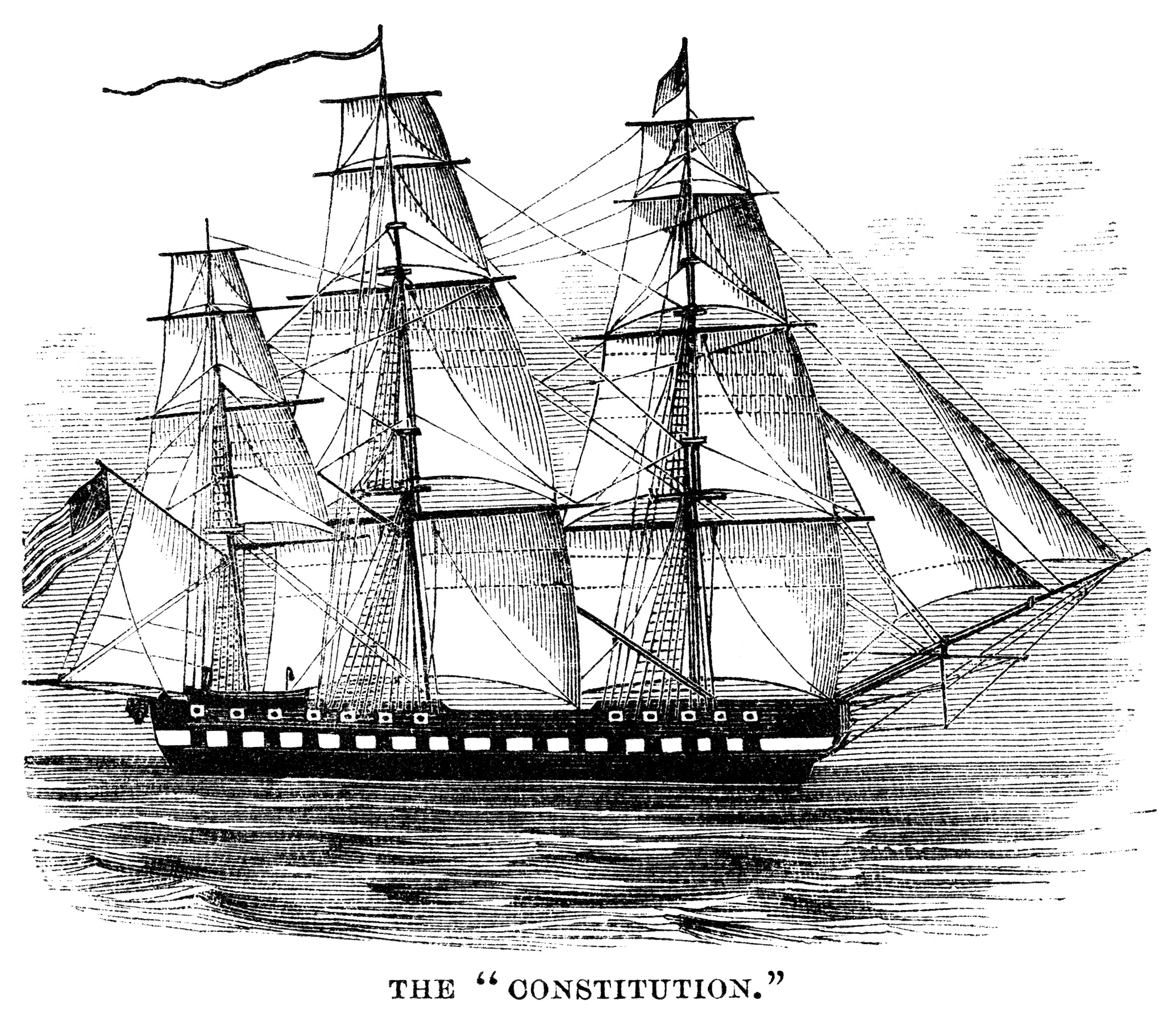
   The Age of Sail (1571-1862) was a period in history in which international trade was dominated by sailing ships, lasting from the mid-16th to the mid-19th century. The Age of Sail runs from The Battle of Lepanto in 1571, the last significant engagement of ships a conflict in which oar-propelled galleys played a major role, to the Battle of Hampton Roads in 1862, in which the steam-powered ironclad CSS Virginia destroyed the sailing ships the USS Cumberland and the USS Congress, demonstrating that the advance of steam power had rendered sail power in warfare obsolete. The period between the between the mid-18th century and the early 19th century, when sailing vessels reached their peak of size and complexity is referred to as "The Golden Age of Sail". during this time the efficiency and use of commercial sailing vessels was at its peak, immediately before steamboats began to take trade away from shipping by sail.
   
Caravel Ship in the mid 15th century marks a major advance in sea travel. Ships of this size could travel further from the coast and into open water, and their carrying capacity was much greater than previous vessels.
Caravel

   
From the mid 17th century to the early 19th century the British empire was built on trade by the trading companies, East India, wars were incited with other countries, Netherlands, France, Spain over control of trade with or conquest of regions with valuable resources that could be exploited for gain. For these reasons the motto “ the sun never sets on the British Empire “ was adopted, because of the reach and their domination of the sea trade and colonial territories that spanned the globe, to maintain and control such a vast, expansive and diverse network, a fleet of superior naval vessels were needed. The need for the most useful and efficient ships fueled the ship yards of Europe to produce them. The most basic ships were redesigned by the Sea Power countries, Britain, France, and Spain in attempts to gain advantage over the other as master of the Seas. A most diverse set of ships were built and copied by the other countries. Until the 15th century, Europeans were limited to coastal navigation. The Caravel was developed about 1451, based upon existing fishing boats. They were agile and easier to navigate, with lateen triangular sails. Being smaller and having a shallow keel, the Caravel could sail sail upriver in shallow coastal waters. With the lateen sails attached, it was highly maneuverable, and could sail much closer to shore. While with the square Atlantic-type sails attached, it was very fast. Its economy, speed, agility, and power made it esteemed as the best sailing vessel of its time. The limited capacity for cargo and crew was its main drawbacks, but did not hinder its success. The Caravel was later replaced by the larger Carrack, which was much more profitable for tradingthe Carrack was a three- or four-masted ocean-going sailing ship that was developed in the 14th to 15th centuries in Europe. Evolved from the single-masted Cog, the Carrack was first used for European trade from the Mediterranean to the Baltic and quickly found use with the newly found wealth of the trans-Atlantic trade between Europe and Africa and then the Americas. In their most advanced forms, they were used by the Portuguese for trade between Europe and Asia starting in the late 15th century, before eventually being superseded in the 17th century by the galleon, introduced in the 16th century. In the middle of the 16th century, a lowering of the carrack's forecastle and elongation of the hull gave the ocean-going galleons an unprecedented level of stability in the water,
Robinson Crusoe  The ship recovered and return to England  The end
Galleon
   Galleons were large multi decked sailing ships, first used as armed cargo carriers by European States, from the 16th to 18th centuries, during the Age of Sail, Galleons generally carried three or four masts with a lateen fore-and-aft rig on the rear masts, and square rigged sails plans on their fore-mast and main-mast. Such ships were the mainstay of maritime commerce into the early 19th century. Gallons were cheaper to build, and could be used in both military and trade. The Galleon was the prototype of all square rigged ships with three or more masts for over two and a half centuries. Sailing ships became longer and faster over time, with square rigged vessels carrying taller masts, with more square sails. Sailing ships with predominantly square rigs became prevalent during the Age of Discovery, when they crossed oceans between continents and around the world, most sailing ships were merchant men, but Age of Sail also saw development of large well-armed warships.
   During the first half of the 18th century saw the development of new type of ships called, “Ship of the Line” a type of naval warship. The Ship of the Line evolved from the Galleon, a three or four masted vessel that carried heavy guns along two decks. They carried a force of about 800 soldiers and sailors. Fleets of these ships engaged in combat would form in a line-of battle, and maneuver to fire their cannon in a broadside against the opposing fleet. This type of ship became the standard battleship of European naval forces from the 17th through to the 19th century. 
Frigate
   The 17th century Frigate was any warship built for speed and maneuverability, “Frigate Built”. These were ships to small to stand in the line-of-battle. they were full rigged ships. Square-rigged on all three masts. They had a lighter armament than a ship of the line, and were used for scouting, patrolling and escort. They were able to carry six months of provisions, and had a long-distance range on the sea. They were sent on commerce-raiding missions against merchant shipping, and were formidable opponents to privateers. In the last quarter of the 18th century, large European sailing vessels were being classified based upon their hull design, by the end of the century they were being classified according to their rigging, rather than their hull design, such as a Brig, Barque, or Schooner. 
   
   A clipper ship was a type of mid-19th-century merchant sailing ship, designed for speed. Developed from a type of schooner known as Baltimore clippers, clipper ships had three masts and a square rig. they were generally narrow for the length, small by later 19th century standards, and could carry limited bulk freight, and had a large total sail area. Clipper ships were mostly constructed in British, and American shipyards, clippers sailed all over the world, primarily on the trade routes between the United Kingdom and China, in transatlantic trade, and on the New York-to-San Francisco route around Cape Horn during the California gold rush. The boom years of the clipper ship era began in 1843 as a result of a growing demand for a more rapid delivery of tea from China, It continued after the discovery of gold in California and Australia in 1848 and 1851. Optimized for speed they typically carried extra sail "sky-sails, moon-rakers, studding-sails ". Types of clipper ships were designed to sacrifice cargo for speed "the extreme clipper". The first extreme clipper ship the Rainbow, built in 1845, followed by the Sea Witch in 1846. Both vessels being influential in later merchant hull designs. They were built to minimize the effect of water resistance against the hull. on the second voyage to China, In 1847 the clipper ship Rainbow sailed from New York to China in 92 days and returned in 88 days. Few if any other square rigged ships could match the speed of these new "extreme" clipper ships.
   The Flying Cloud was a clipper ship that could claim the fastest passage between New York and San Francisco, 89 days, 8 hours. Josiah Perkins Creesy, who skippered the Flying Cloud on record setting voyages from New York to San Francisco in 1851 and 1854. Eleanor Creesy, the wife of Captain Josiah  P. Creesy, was the navigator on her husbands ships, she learned navigational skills from her father, Captain John Prentiss, and was one of the first women to navigate ships at sea, and is acknowledged as having a major role in the record setting voyages of the Flying Cloud. The last China trade Clipper ships were acknowledged as the fastest sailing vessels. When fully rigged and riding a trade wind, they had peak average speeds over 16 knots.  China trade Clipper Ships were the fastest commercial sailing vessels ever made. The American vessels were known to be the fastest. The Sovereign of the Seas clipper ship, reported the highest speed ever achieved by a sailing ship - 22 knots. Made while running "easting" down to Australia in 1854. There are 11 other instances of a sailing ship logging 18 knots or over, ten of these were American Clipper Ships. Besides the 465  nautical-mile record of the Champion of the Seas clipper ship, there are another 13 clipper ships sailing over 400 nautical-miles in 24 hours, and with few exceptions all of the port-to-port sailing records are held by American Clipper Ships, The decline in the use of clipper ships started with the economic downturn following the panic of 1857, and continued  with the gradual introduction of the steamship.


Clipper Ship Drawings | American Clipper Ship Photograph


   From the earliest recorded history and in the archaeological records before that. The use of wind and water by mankind in sailboats to facilitate trade relations is well documented. Alongside the wheel, this innovation became a catalyst in the advancement of trade in the earliest cultures, societies and civilizations. Those who could harness the wind at sea, like those who harnessed the horse on land, had a new source of energy. Unlike a horse that can be tamed, the wind and sea were at times very unpredictable in their nature. Despite all of the hazards of seafaring, there were those who, with enthusiasm and determination, embraced the new technology of sailing as a means to accomplish greater tasks, and endeavored to seek greater knowledge and understanding of the world in general.    Development of sailing techniques and shipbuilding added value to the cultures that had the knowledge and ability to take advantage of it. The earliest known sailing knowledge was known to the pacific islanders as a means for livelihood but, the most advancements in ships and trade were in the Mediterranean sea. Early Egyptians utilized the Nile river for trade and cargo shipments. As the ability to navigate with the wind, by means of the invention of the sail became more widespread, seagoing boats were built for the open sea. Those who learned to sail from port to port by the stars, became the masters of the Mediterranean.
 As shown throughout ancient history every culture with the most technological advancements in sailing knowledge and ships were some of the most advanced and prosperous civilizations. The Minoans advanced this way, the Mycenaeans inherited it from the Monoans, the Grecians inherited it from the Myceneaens. each advancing to a greater extent than the previous civilization.
 The greatest early sea traders of the Mediterranean were by far the Phoenician's, whose seafaring knowledge far surpassed anyone of their time. They were the preeminent sea traders who with few permanent settlements, became the sea people. 
 Roman Authority eventually became to dominate the known world, and attempted to make advancements into the unknown world, not as traders but as conquerors. The ancient sailing- trading cultures of the Mediterranean were in contact with the other trading -cultures, in Eastern Asia, Indian Ocean, West Africa, Southern Atlantic Ocean and Northern Europe, Northern Atlantic Ocean, North Sea, and Baltic Sea The regions of Europe now known as Spain, France, England, The Netherlands, Germany, and Scandinavia were very much influenced by ancient foreign trade. A trade-route know as the Amber road, from the Baltic Sea to the Adriatic Sea, was well known by early Grecian civilization and before. Aegean sea traders were in contact with Northern European's from the earliest times. The Roman Legions made themselves known in parts of Northern Europe. Roman's established themselves as overlords to the native populations, with limited success. As Influencers they were very successful. Their military tactics were used against them, and forced trade created an awareness on the native people of the wider world. There were at times when the Romans employed native militia into their legions, not against the native people, but in other regional Roman conflicts, and these soldiers upon returning, brought with them the knowledge and skills of foreign lands. After the fall of the Roman Empire When the Northern Europeans came in conflict with each other no doubt those earlier Roman tactics were used against each other. The Scandinavian, Anglo Saxon, Germanic, Franks, and Celtic became Northern Europe's main cultures. Eventually coming to dominate all of the regions, and creating the countries of England, Irish, Scotland, France, Belgium, The Netherlands, Germany, and Scandinavia. The Traders / Invaders of Northern Europe and the Traders / Invaders of the Mediterranean were of completely different cultures, but were in continuous contact with each other from ancient times. Goods and ideas were exchanged on and off over time. Both grew independent of each other but were also influenced by each other at the same time. 


   The most influential trade item of all was Christianity, freely given through the gospel from the savior of mankind and light of the world, Jesus Christ. Cornelius a Roman Centurion was the first Gentile to be baptized into the Christian faith, as related in the New Testament, book, The Acts of the Apostles,(KJV), chapter 10, verses (1) "There was a certain man in Caesarea called Cornelius, a centurion of the band called the Italian band." (2) " A devout man, and one that feared God with all his house, which gave much alms to the people, and prayed to God alway." (3) " He saw in a vision evidently about the ninth hour of the day an angel of God coming in to him, and saying unto him, Cornelius." (4) " And when he looked on him, he was afraid, and said, What is it Lord? And he said unto him, thy prayers and thine alms are come up for a memorial before God."  (44) " While Peter yet spake these words, the Holy Ghost fell on all them which heard the word." (47) " Can any man forbid water, that these should not be baptized, which have received the Holy Ghost as well as we?". (48) "and he commanded them to be baptized in the name of the Lord. Then prayed they him to tarry certain days." The baptism of Cornelius is one of the first important events in the spread of early Christianity into western civilizations. 


So we are always of good courage. We know that while we are at home in the body we are away from the Lord, for we walk by faith, not by sight. —2 Corinthians 5:6-7


   The conversion of Paul to Christianity was by far the most influential voice in spreading the Gospel of Christ to the Gentiles, The New Testament book,(KJV), The Acts of the Apostles, chapter 9, verse 15 " But the lord said unto him, Go thy way: for he is a chosen vessel unto me, to bear my name before the Gentiles, and Kings, and the children of Israel:", and in chapter 13, verse 47 " For so hath the Lord commanded us, saying, I have set thee to be a light of the Gentiles, that thou shouldest be for salvation unto the ends of the earth."
   Another important point in the progress of Christianity among the Gentiles was recorded when the disciples of Jesus Christ were first called Christians. It was in the New Testament book of The Acts of the Apostles,(KJV), chapter 11, verse 26 “ and when he had found him, he brought him to Antioch. And it came to pass, that a whole year they assembled themselves with the church, and taught much people. And the disciples were called Christians first in Antioch.”


   The first reference of sailing in the Mediterranean sea, in the New Testament, is in The Acts of the Apostles, (KJV), chapter 13 verse 4. " So they, being sent forth by the Holy Ghost, departed unto Seleucia; and from thence they sailed to Cyprus." Sailing, to spread the gospel, is mentioned over twenty more times, in the book of The Acts of the Apostles.
   Sailing craft have been a part of the continuing evolution of civilizations throughout history. sailing vessels have been used to provide for the basic needs, as a means to obtain food and materials.  The expansion of  trade demonstrated the usefulness and necessity of watercraft to facilitate the delivery of  the increasingly larger amounts of cargo being exported and exported from abroad. The Transportation of goods over the sea, led to the transportation of people also, which in time of conflict naval fleets were developed for use in battle. Sailing technology has been used in a variety of ways by the different cultures that had come to depended upon it. As the use of sailing spread from one region and civilization to another it created a new and useful vehicle for the activities of those who had the ability to access the sailboat. Whatever activity it was used for positive or negative, it provided a means of spreading Christianity from the Middle East, throughout the Aegean and Mediterranean worlds,and on into the North Atlantic and Baltic. Eventually with advancements in sailing achieving the ability to cross oceans, the gospel of Christianity crossed the oceans also. the Age of Sail as a means of transportation of goods and people has been minimized to a small fraction of what it became in the past, but its technology is still present and useful in many places. There can never be any doubt about what sailing has accomplished over time, it has been the means to create and expand civilizations, and giving  the ability to individuals to broaden their vistas both physically and spiritually.   


René Quillivic On the Open Sea 1921